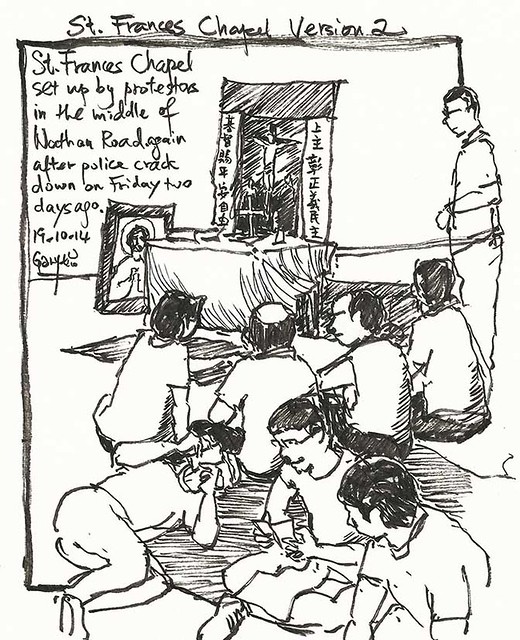
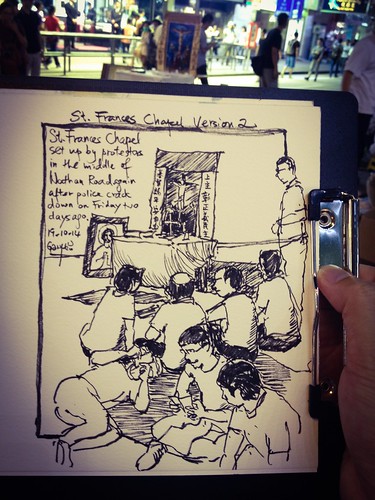
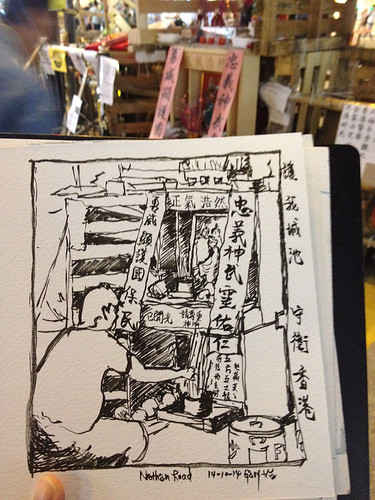
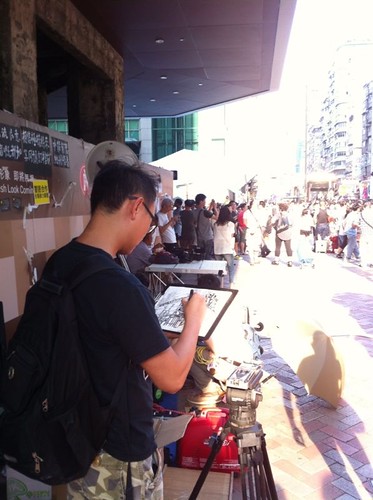
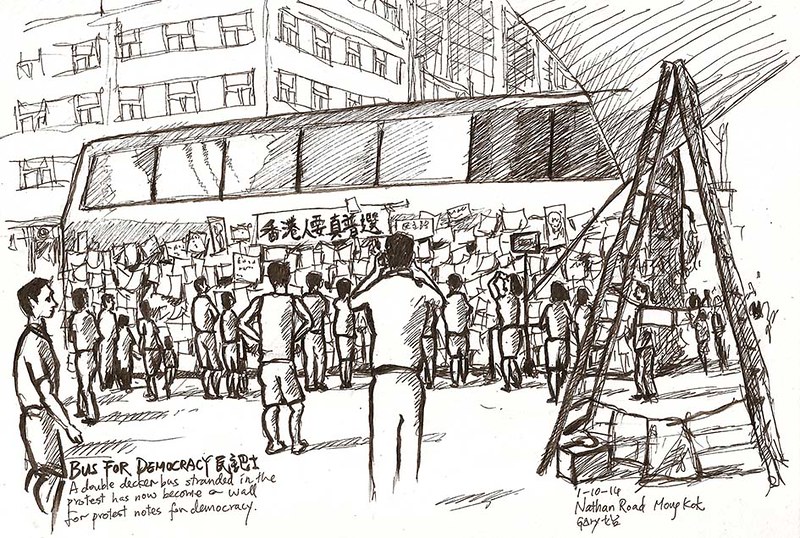
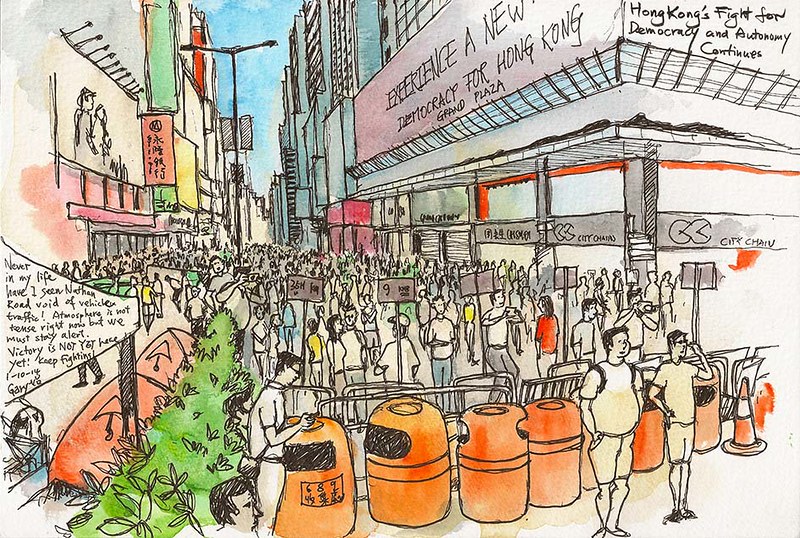
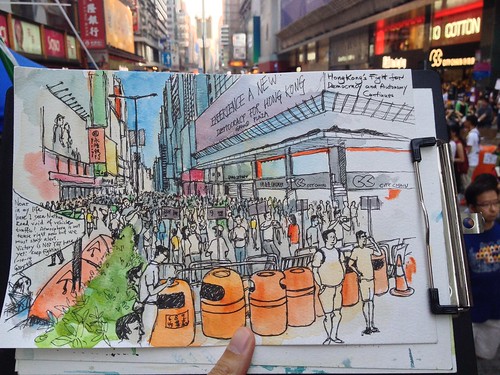
St Frances Chapel set up again in Nathan Road by protestors for democracy after it was dismantled by police during violent crackdown last Friday. Mong Kok Hong Kong #umbrellarevolution
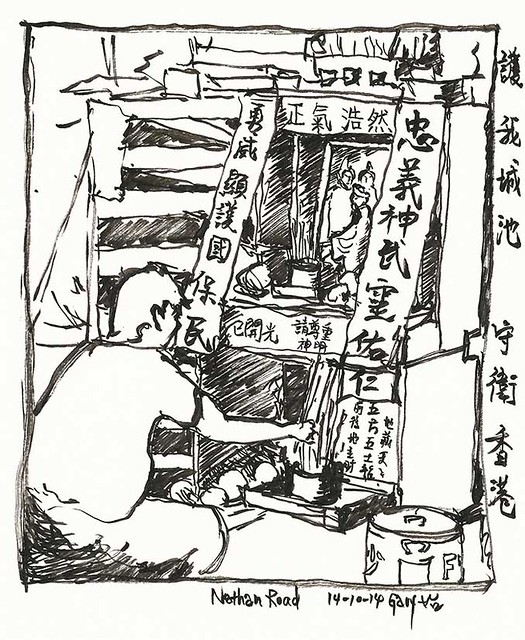
A shrine dedicated to the protector god "Kwan Kung" was set up a week ago at one of the barricades along Nathan Road and since then the shrine has been growing in scale as worshippers are bringing in various accessories to add onto the simple shrine. Office ladies, workers, housewives and senior citizens were seen lining up orderly to pray in front of the god, hoping that Hong Kong will soon get true democracy! 自從路障關帝廟係彌敦道出現後,規模日大,前來祁求關帝保佑香港嘅男女老少,源源不絕!
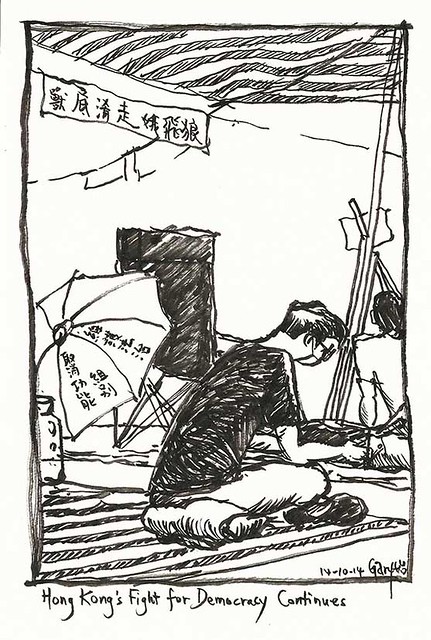
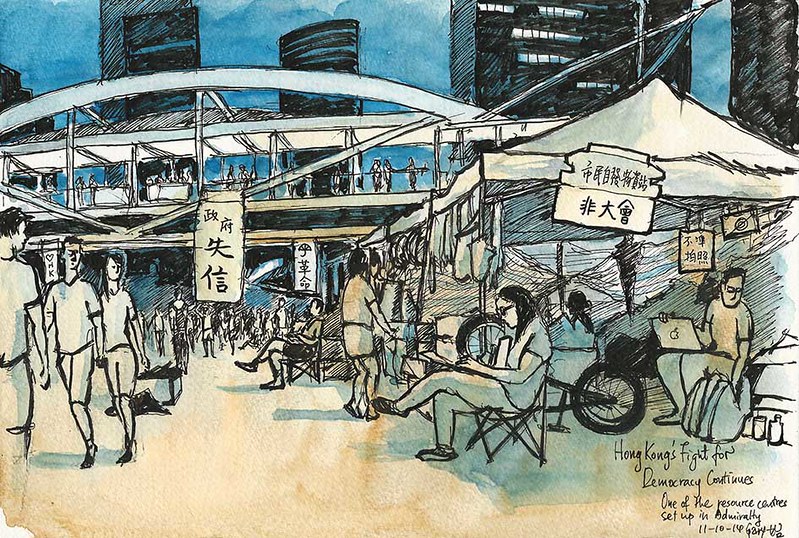
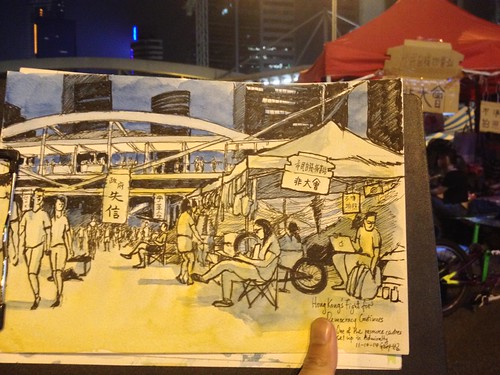
The protest for true democracy in Hong Kong is about to enter the third week. Volunteers and supporters keep on bringing in resources to various protest sites.
雨傘革命繼續!支持者繼續帶來物資到各區支援!
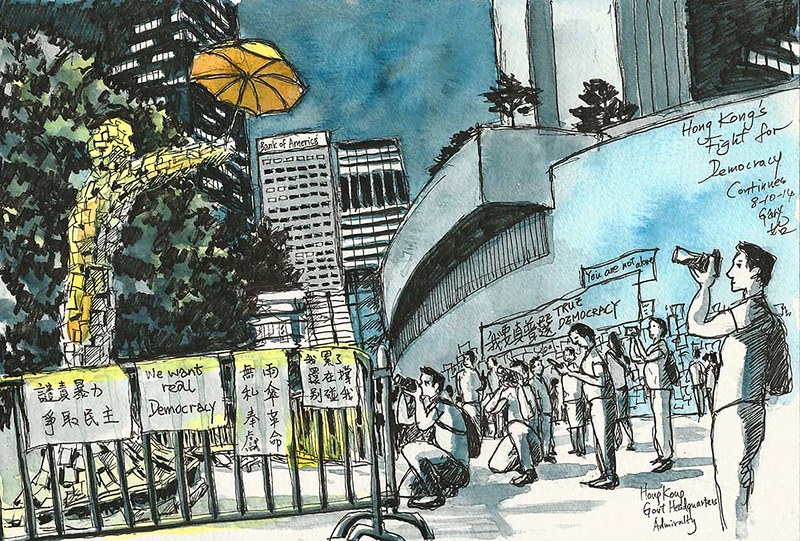
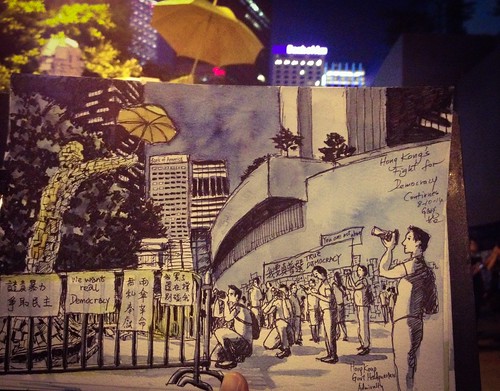
The sculpture of the Umbrella Man is now erected in front of the Hong Kong Government Headquarters. Inspired by protestors holding just umbrellas to fend off pepper spray and tear gas on 27 September, a group of artists specially made this sculpture to show their support for every Hongkongese who is fighting for true democracy for Hong Kong! 雨傘擋葫椒噴霧催淚彈已成為香港人爭民主真普選嘅象徵! 昨日再到金鐘,第一次親眼見到雨傘勇士像,好感動!
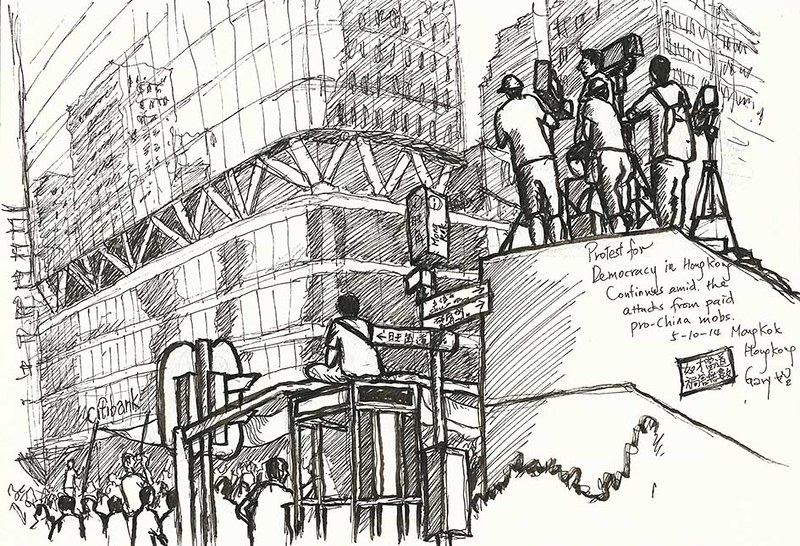
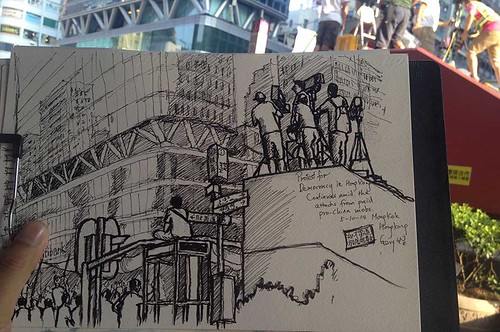
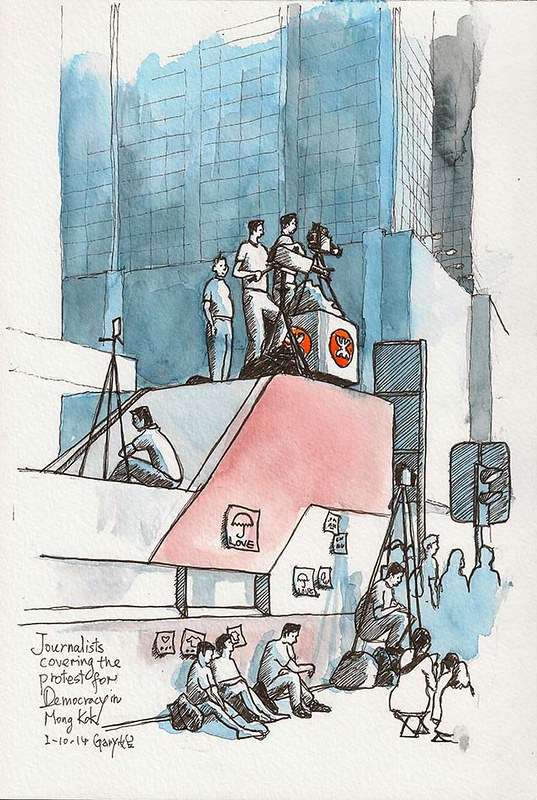
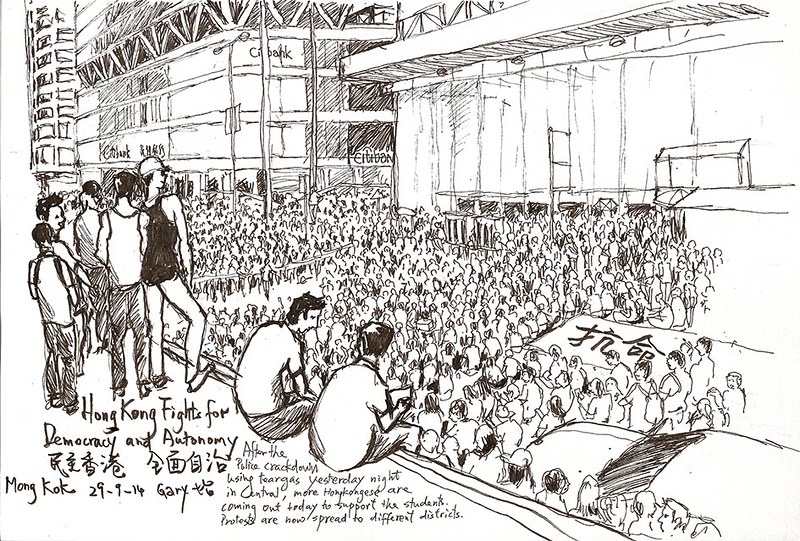
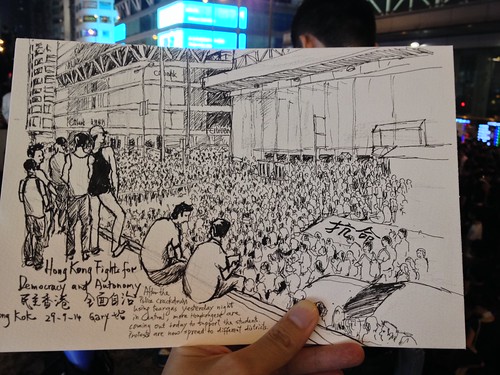
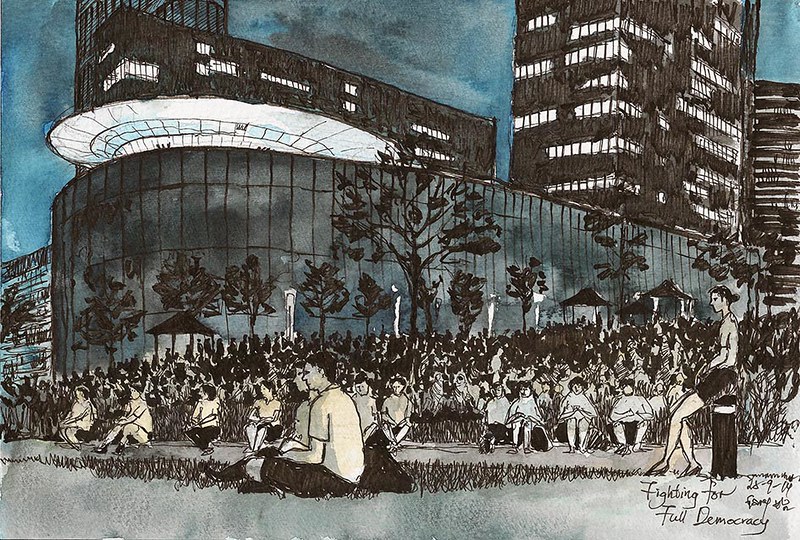
After the police crackdown on peaceful protestors using teargas in Central and Admiralty yesterday, even more Hongkongese are coming out into the streets today to say no to the fake political reform masterminded by the China-controlled Hong Kong government. Protests have spread to different districts in Hong Kong I was standing on top of the city's Mass Transit Railway Entrance roof with a group of protestors. By the time I finished the sketch, the sky had darkened and the streets around me were all packed with people, showing their support for those who suffered yesterday.
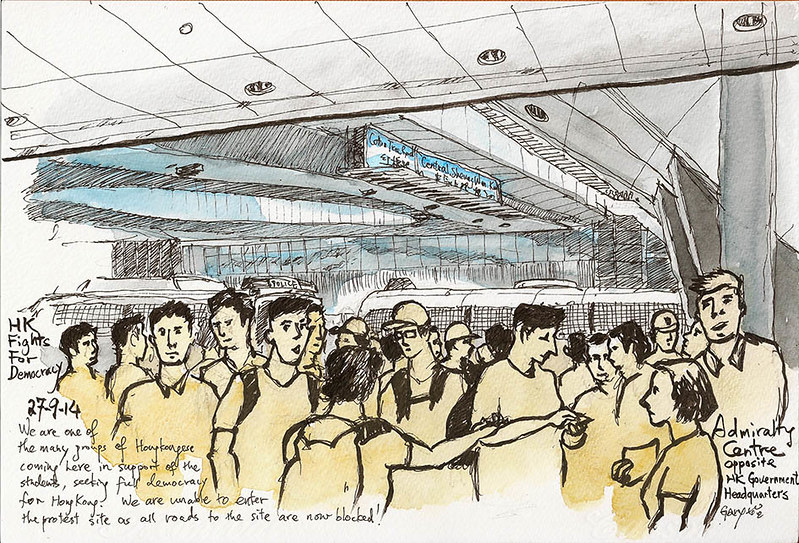
We were one of the many groups coming here in support of the students, seeking democracy and autonomy for Hong Kong. We were unable to enter the main protest site as all roads to the site were blocked. When we were leaving, the riot police suddenly fired gas on the protestors. A group of riot police with guns and shields started to march into the crowd! 我同三位香港速寫人到政府總部以畫見証香港重要時刻。無咕到警察會發射催淚彈震壓! Admiralty Centre Hong Kong
Students strike continues in Hong Kong for the fourth day! China has violated the Joint Sino-British Declaration and the Basic law (the constitution of Hong Kong) attempting to fully control Hong Kong and us. Students from universities and high schools are coming together to fight for full democracy and autonomy for our city state! Hongkongese, act! Give them concrete support and win the battle! 罷課繼續, 一齊有效支援,同心協力,係要打贏呢場仗!
Tamar Park Hong Kong Government Headquarters Central Hong Kong
The Long-term Causes that led to waves of protests in Hong Kong (Commentary from entry posted on 17 June 2014)
Since the handover of Hong Kong from the United Kingdom to the People’s Republic of China in 1997, the People’s Republic of China has been increasingly interfering with Hong Kong’s internal affairs which violated the “One Country, Two Systems” principle enshrined in the Sino-British Joint Declaration ensuring Hong Kong full autonomy on all internal affairs except defense and diplomacy. For instance, even as of 17 years since the handover, Hongkongese were still unable to elect its “Chief Executive”, an equivalent to the president of a country, as the position is still appointed by a pro-China committee. The Legislative Council is still not fully elected by the Hong Kong general public but largely controlled by pro-China legislators. Every day, a quota of 150 is given to immigrants from the People’s Republic of China and, ironically, as an autonomous state, Hong Kong is deprived of the right to filter or refuse entry of these people. It is an attempt to change Hong Kong’s demography. And, in recent years, deprived of any mechanism to regulate the inflow of visitors from China, Hong Kong have seen a dramatic increase in number of visitors. In 2013, the total number of visitors had exceeded 54 million people, six times the population of Hong Kong and, among them, 75% came from China. These visitors from China have been buying up daily necessities such as milk powder and smuggling them to China in huge quantities in broad daylight, overloading the public transport systems, driving up rent and effectively shut down local and traditional shops with great cultural significance all around the city in huge numbers. Worst still, the People’s Republic of China has just issued a “White Paper” in June, claiming that China has the right of total governance in Hong Kong, an act that violated the Sino-British Joint Declaration and essentially an attempt to abolish the constitution of Hong Kong.
Two Systems for Two Peoples
The growing identity of Hongkongese as a separate group of people different from that of the Chinese of the People’s Republic of China had never been stronger as China’s aggression escalates. As a matter of fact, Hong Kong had been separated from Mainland China since the British takeover in 1841, which since then developed into a community with its own distinct identity. It was not until 1997 that Hong Kong was handed over to the present People’s Republic of China, without first consulting the Hong Kong public.
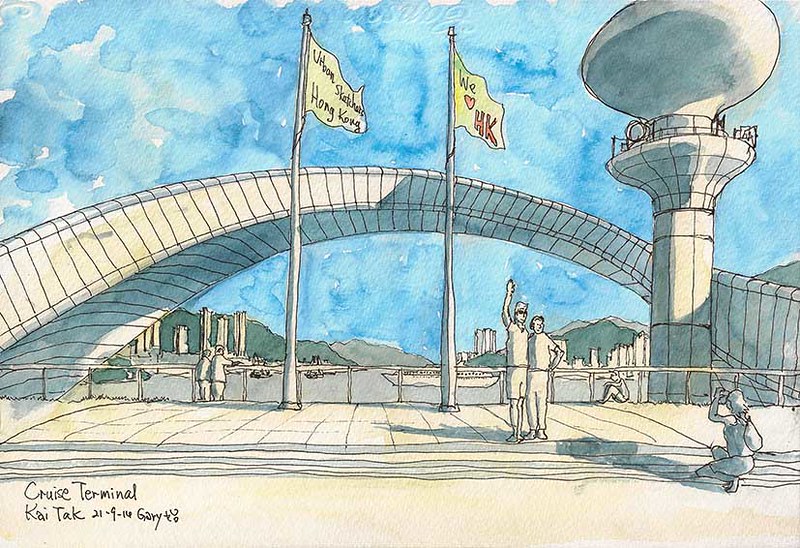
Constructed on the end of the former runway of the legendary Kai Tak Airport, the under-used cruise terminal is a bit isolated from the nearby urban area but still, it's a nice place to visit as the roof garden provides excellent sea views and it's not crowded. A great place to sketch the harbour!
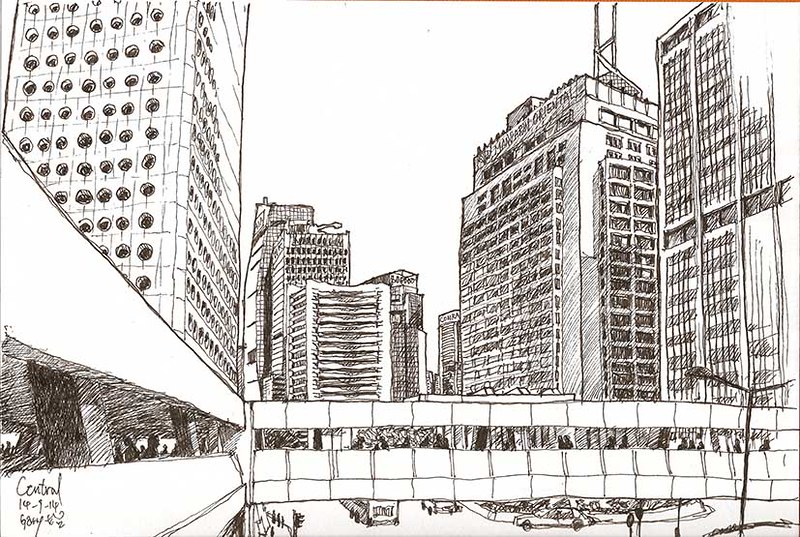
White boxy outlook with circular windows, Jardine House (formerly called Connaught Centre) has always been my favourite skyscraper in Hong Kong. Completed in 1972, it had been the tallest building in Hong Kong and Asia for eight years until Hopewell Centre took the crown. 怡和大廈, 舊稱康樂大廈,建於1972年,曾經係全港同全亞洲最高嘅大廈,直至灣仔合和中心於1980年建成。白色正方外牆加上圓型窗口,怡和大廈一直係我最喜歡嘅摩天大廈。
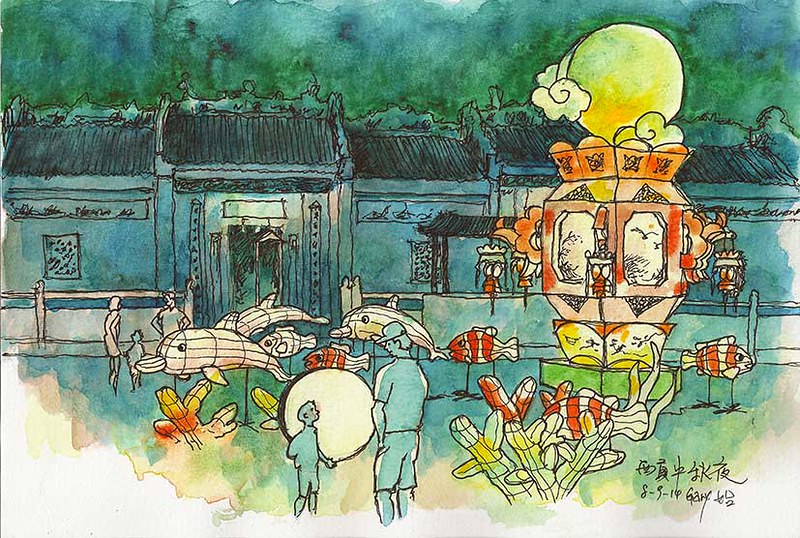
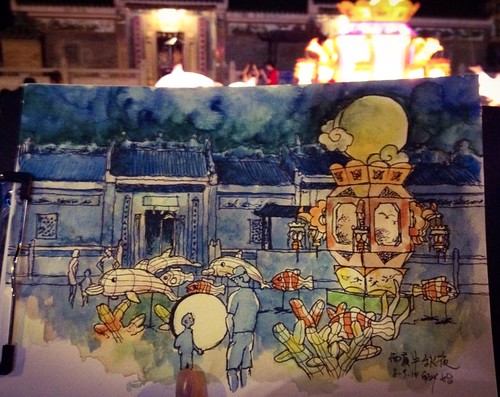
It turns out the cold blue colour is very green when under normal indoor lights. The street lights on site did affect how we perceive colours. To make it less green somehow, I glazed the background temple, the sky and parts of the ground with a blue tone when I was home. 晚間街燈下,以為是藍色,但在正常光下原來是太綠了! 我後來係背景、天后廟同地上加上一層藍色,令綠色上加多一點藍調。
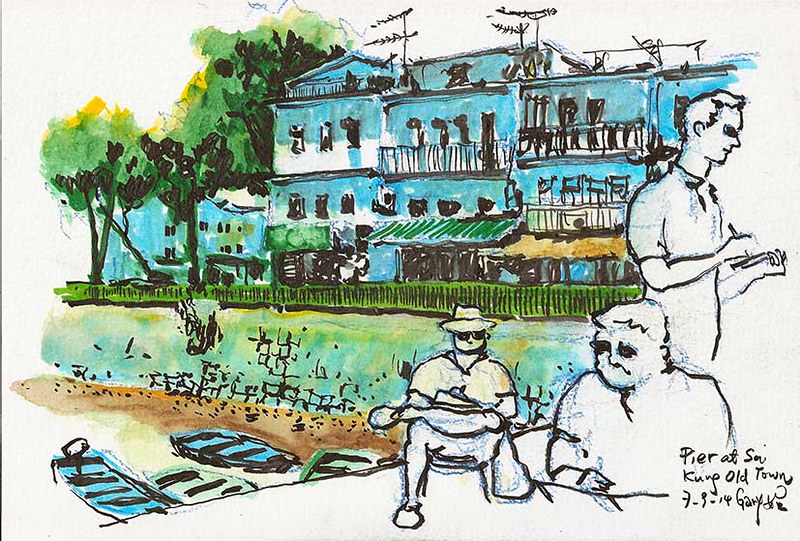
We settled on a pier next to Sai Kung Old Town. Three sketchers were busy sketching the views they found pleasing and I decided to capture them in my sketch as well.
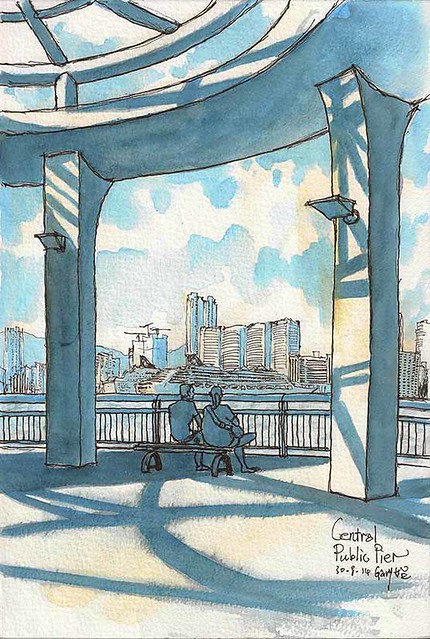
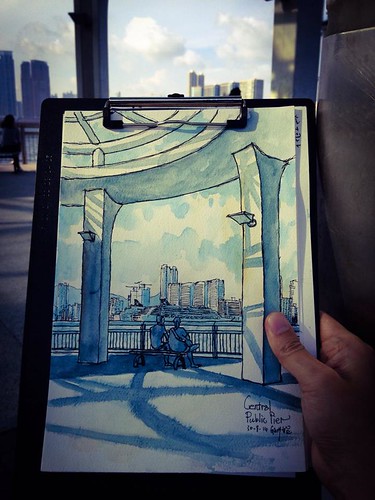
After attending a workshop this morning, I walked to the Central Public Pier and did a sketch of the harbour. Instead of just sketching the harbour, the intriguing shadows cast on the ground and on the pillars caught me and hence they are included in the sketch.
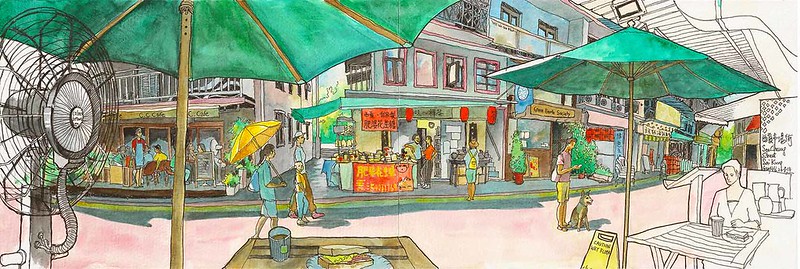
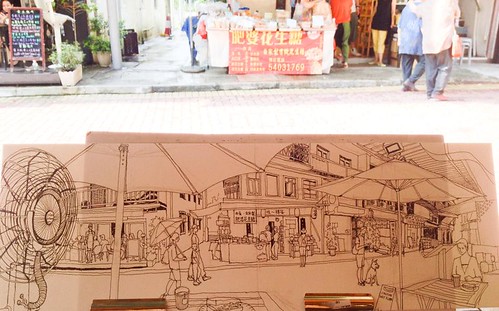
I stayed at a coffee shop in Sai Kung Old Town yesterday afternoon sketching the street scene. Since the panorama sketch was quite complicated, it took me the whole afternoon to get it done.
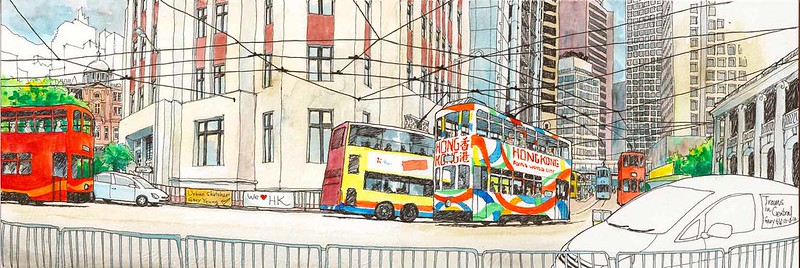
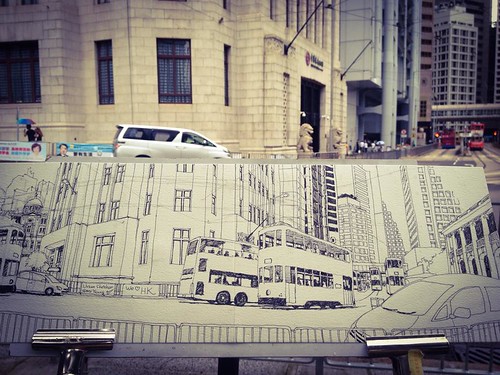
The trams and the cables above them have witnessed the many changes in Hong Kong for more than a century! Finally, I found the perfect spot to sketch them! I went to Central and found this perfect spot opposite the old Bank of China Building to sketch them. The winding road and the web-like cables overhead make a very interesting composition for a panorama sketch and so I settled down and spent an afternoon sketching the scene. 電車同穿梭半空的電纜培伴香港已超過一個世紀,今次終於揾到合適地方去捕捉它們。舊中銀對面遮打花園正是畫電車同半空蜘蛛網狀電纜的好地方。
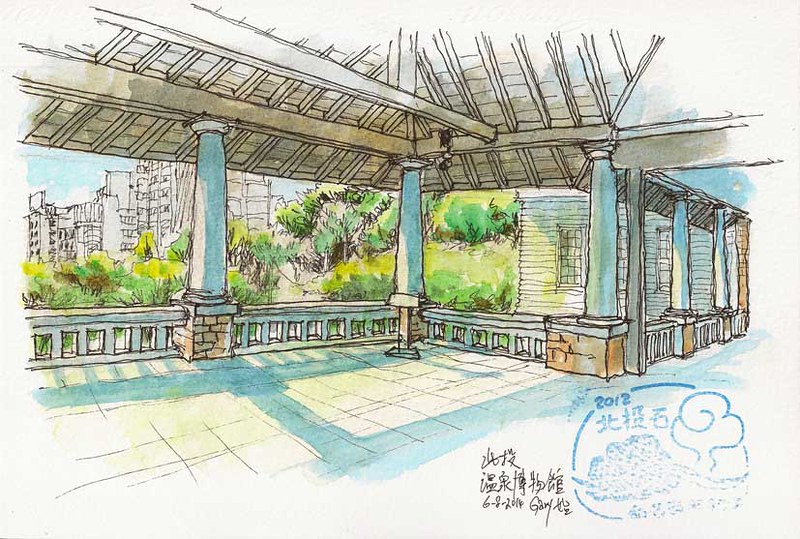
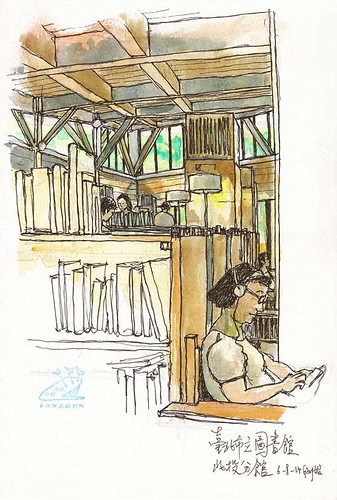
Thanks to Carton and friends from Urban Sketchers Taipei, I had a very happy sketch day in Beitou and visited a few interesting spots in the area. The first place we sketched was the Beitou Public Library, a wooden structure that stands next to the hot spring river. I was really drawn to the interior of the library so I decided to stay inside and made a sketch out of it. During lunch, we shared our sketches and talked about different techniques and styles. Carton, the leader of the Taipei sketch group, even demonstrated to us his quick sketch method. After lunch, we visited the Beitou Hot Spring Museum, formerly a Japanese bathhouse and I chose to sketch in the balcony of the museum afterwards. 感謝Carton同「速寫台北」的朋友帶我遊北投同一齊速寫。早上先到北投圖書館。此館主要用木材建成,依河而建,無論內外都很有歐陸風格。我特別喜歡館內的環景,於是就留在館內速寫。午飯時大家分享作品,品評切蹉,Carton還示範一筆畫一畫!之後前往原為日本溫泉浴室的北投溫泉博物館參觀,我並在二樓露台上速寫。
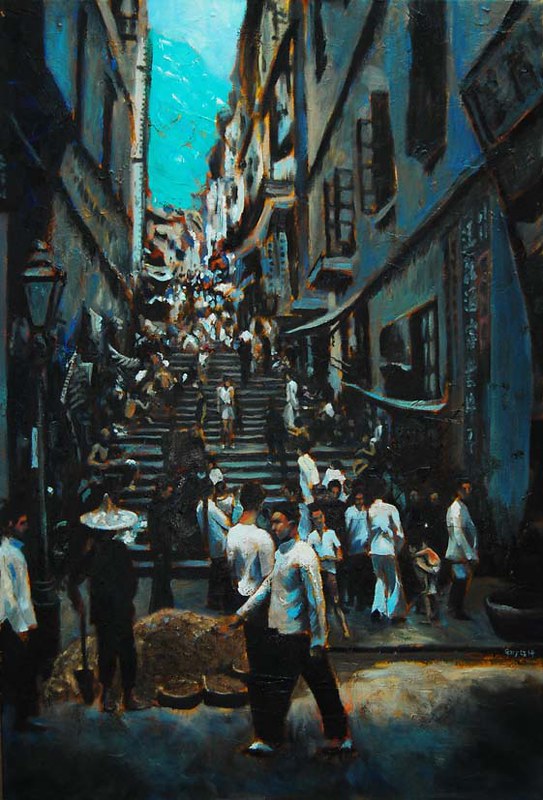
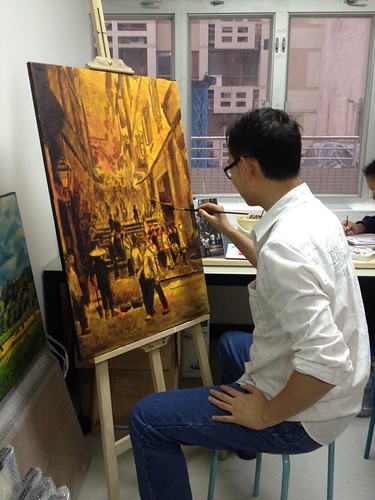
Retro Ladder Street Oil and Acrylic on Canvas The painting is based on an old photo of Ladder Street. I really like the clothes that the people were wearing which were either white or black which unified the image so well. A deliberate blue tone was added to the painting so as to create a cool jazzy feeling to it. It's also quite a challenge and a lot of fun to paint so many people in one painting. While painting each one of them, I was like going back in time, trying to think and feel what each person's life was like. 復古樓梯街 油彩,塑膠彩畫布 此畫是根據舊照片畫的。地點是樓梯街。大概是當時其他色彩的布料昂貴吧,畫中人物衣服都是非黑即白。如此黑白配襯,畫面又特別好看。繪畫時我刻意加上藍調,給整張畫一種冷的感覺。還有刻畫每一個人時,好像時光倒流,猜想他們每一個當時究竟過著怎樣的生活。
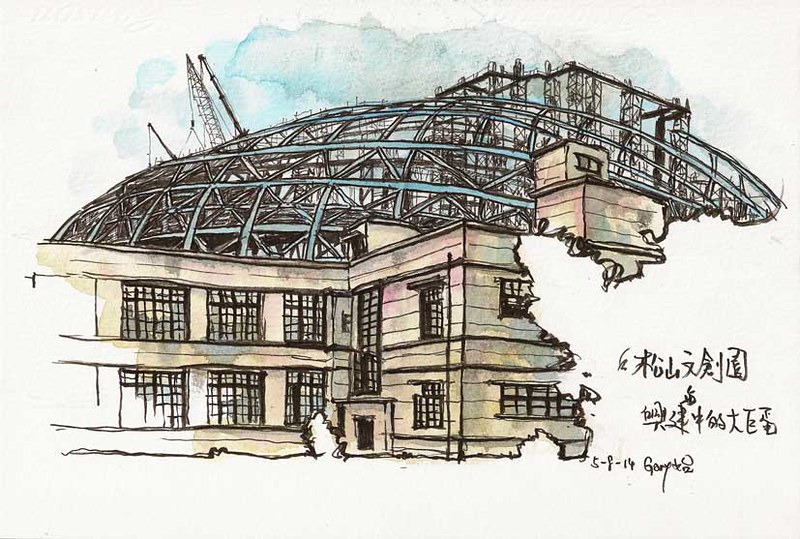
It's my first time to visit Song Shan Cultural Park. The old complex I drew which was one of the two old main buildings was built in 1939 and was originally a cigarette factory. It stopped operation in 1998 and was finally converted into a cultural park in 2010. After a nice walk around the park, I settled in the inner courtyard (Baroque Garden) of the old complex and started to sketch. I really found the juxtaposition of the Taipei Dome in construction and the old building in front of it a very interesting sight to sketch. 松山文創園原本是松山菸廠。廠房建於1939年並於1998年停產。2010年轉型為松山文創園。 遊覽完畢,選了舊建築內園「巴洛克花園」速寫。後方建築中的台北大巨蛋同園內舊建築相影成趣。
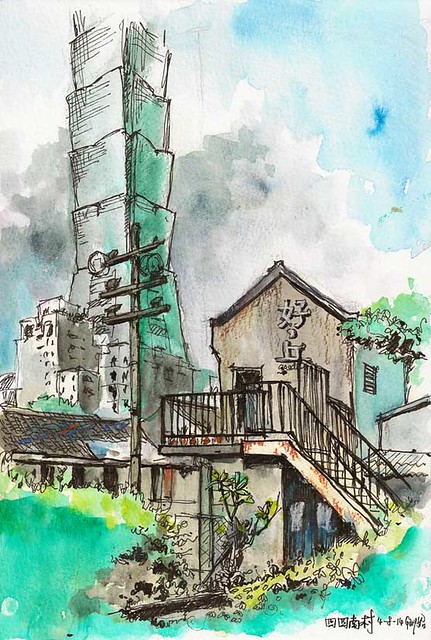
Heard that Si Si Nan Village has become a hip art venue so I decided to go there to have a look on the first day in Taipei. It was already quite late when I arrived at the village and sadly the village was closed as it was under renovation. To waste no time, I climbed up a berm next to the village and sketched the outside of the village together with Taipei 101 as backdrop.